共生之美,关于生,也关于死;关于永恒,也关于瞬间;关于风景,也关于风景中的我们。
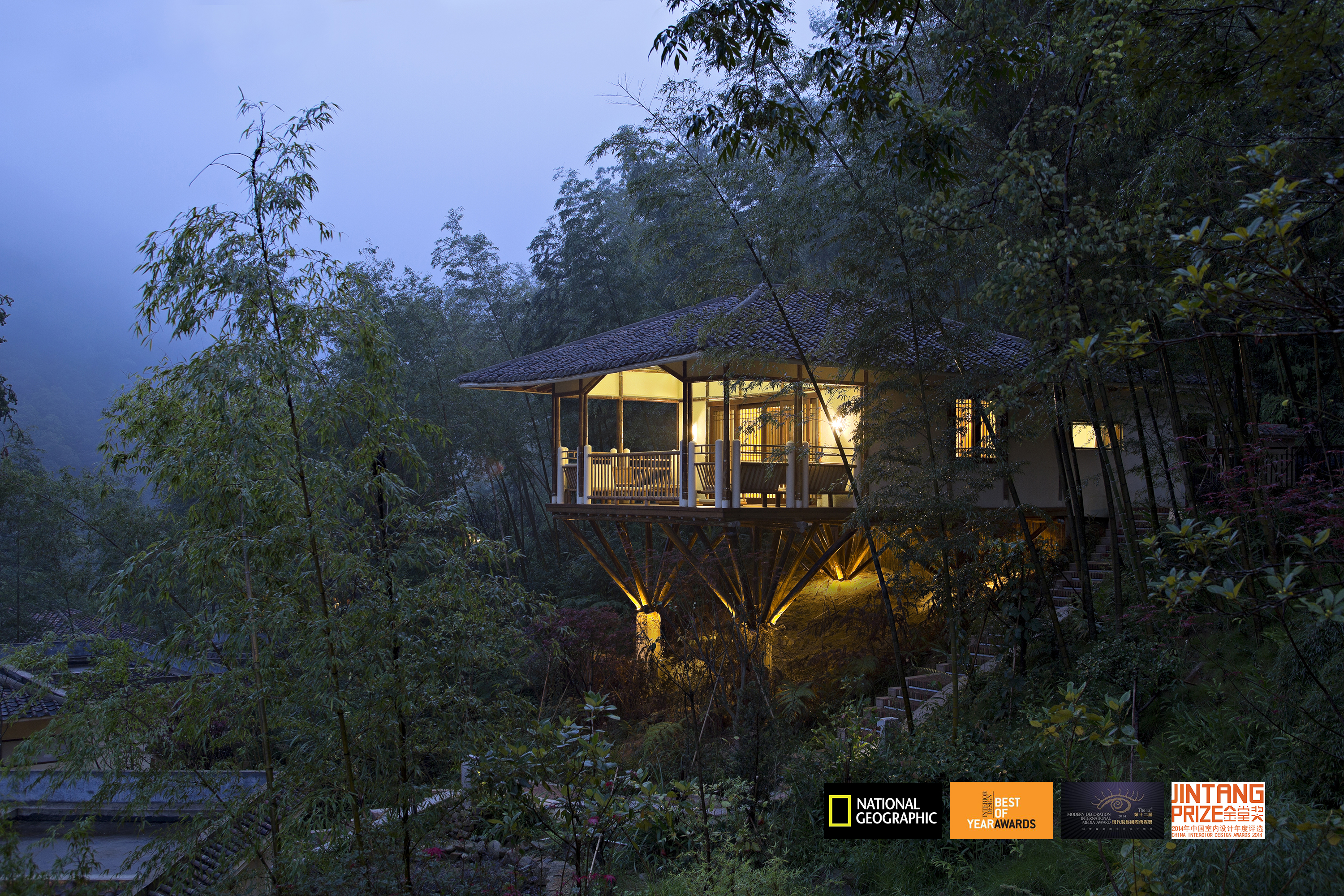
竹别墅由广州共生形态承接室内设计工作后,设计师彭征在解读大师建筑设计的基础上对原方案进行了地方性的改造,融入了当地的建筑文化与元素,并增加了客家民居式的后院。
竹别墅室内外从客家民居建筑中吸取灵感,采用前半部吊脚楼与后半部天井院落相结合的空间布局,干湿分区,前半部为32根木桩托起的吊脚楼,包括客房和观景阳台;后半部为天井式温泉区,包括湿区、温泉池和户外平台。由于温泉区的改造,使得建筑的功能性和艺术性得到扩展。
The Beauty of Symbiosis is about life as well as death, about eternity as well as the fleeting moment, about the landscape as well as us dwelling in it.
After C&C Design from Guangzhou took over the interior design of the Bamboo Villa, designer Peng Zheng carried out localized renovation on the original scheme based on interpreting the master’s architectural design, integrating local architectural culture and elements, and adding a Hakka-style backyard.
Drawing inspiration from Hakka residential architecture, the Bamboo Villa adopts a spatial layout that combines a stilted building in the front and a courtyard with a skylight in the rear, realizing a dry-wet zoning. The front part is a stilted building supported by 32 wooden piles, including guest rooms and viewing balconies; the rear part is a skylight-style hot spring area, covering the wet zone, hot spring pools and outdoor platforms. The renovation of the hot spring area expands both the functionality and artistry of the building.


 PREVIOUS