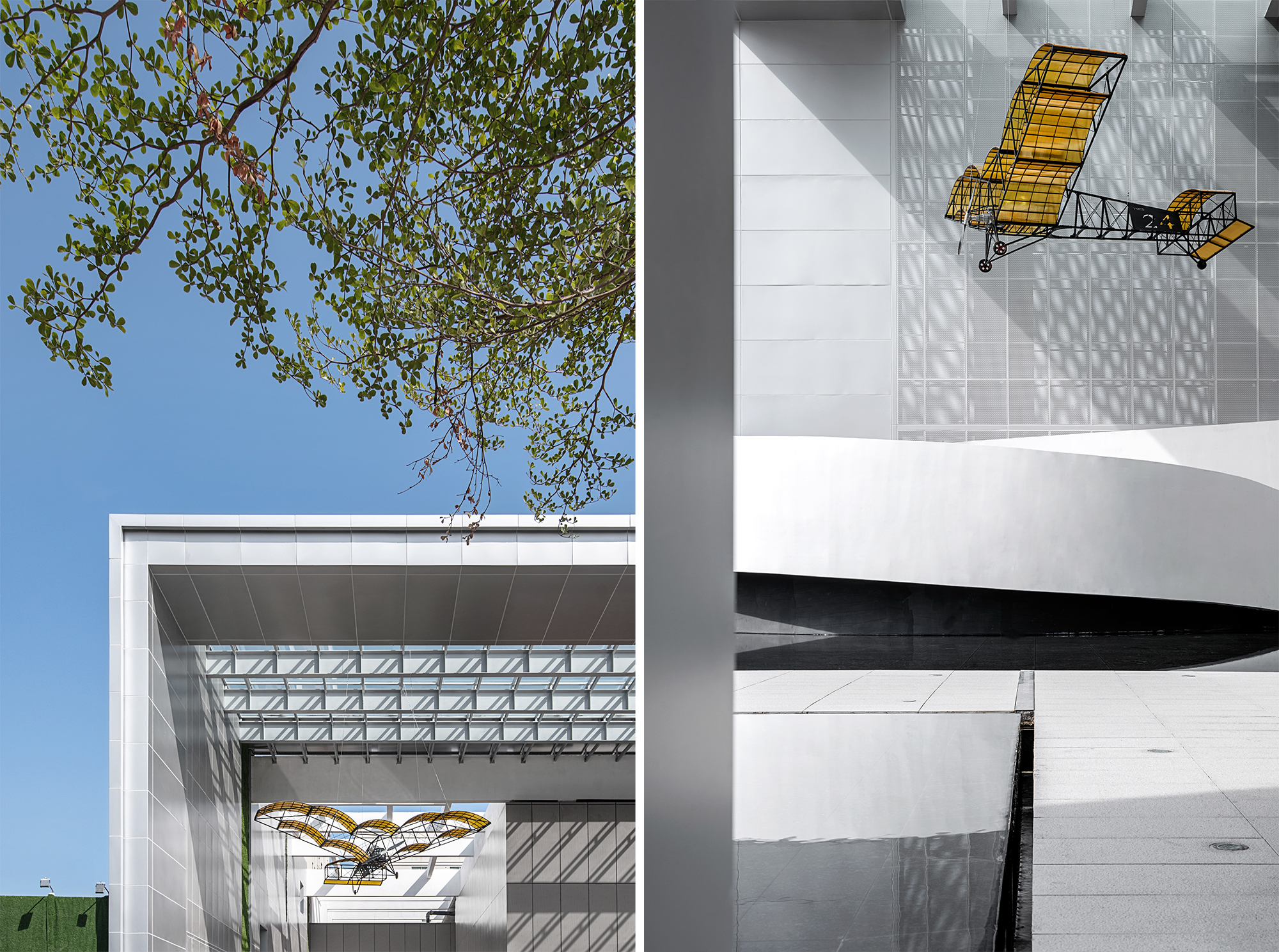
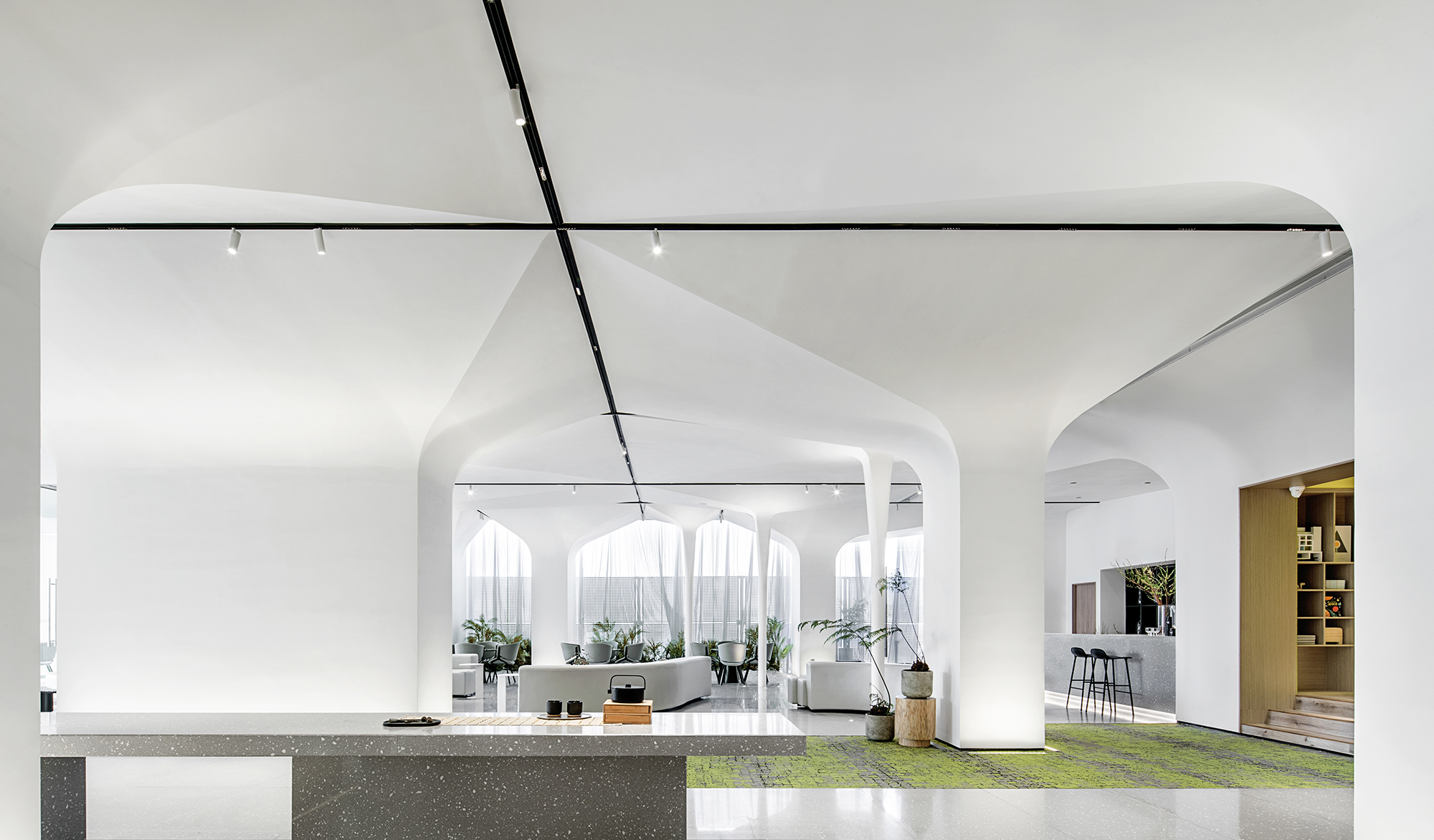
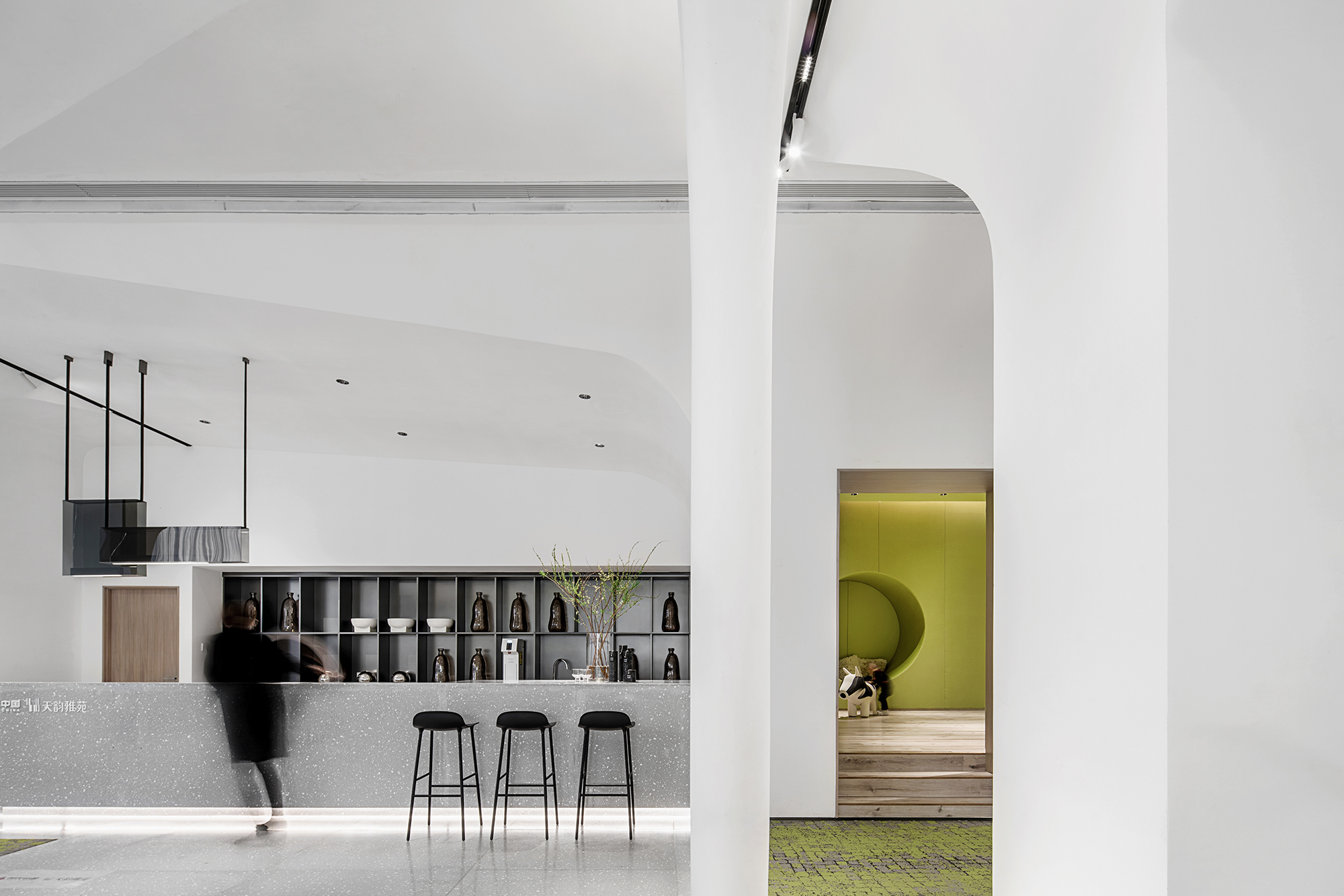
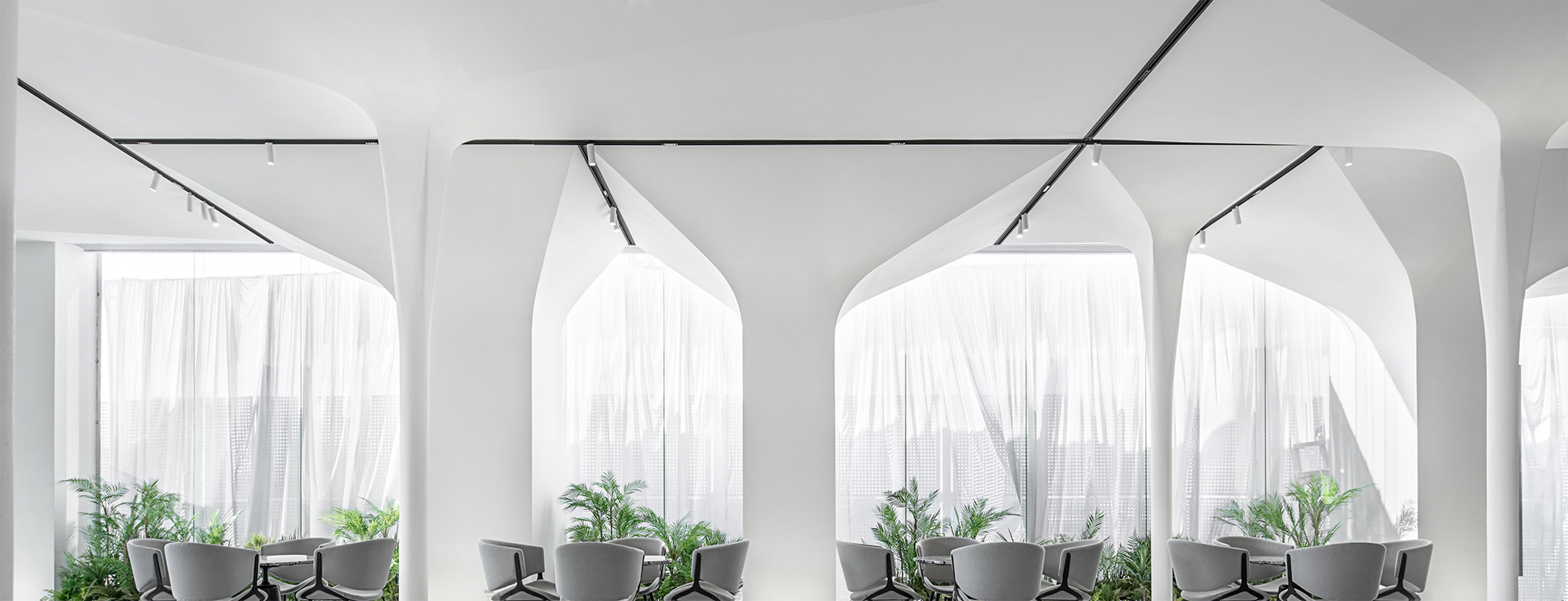
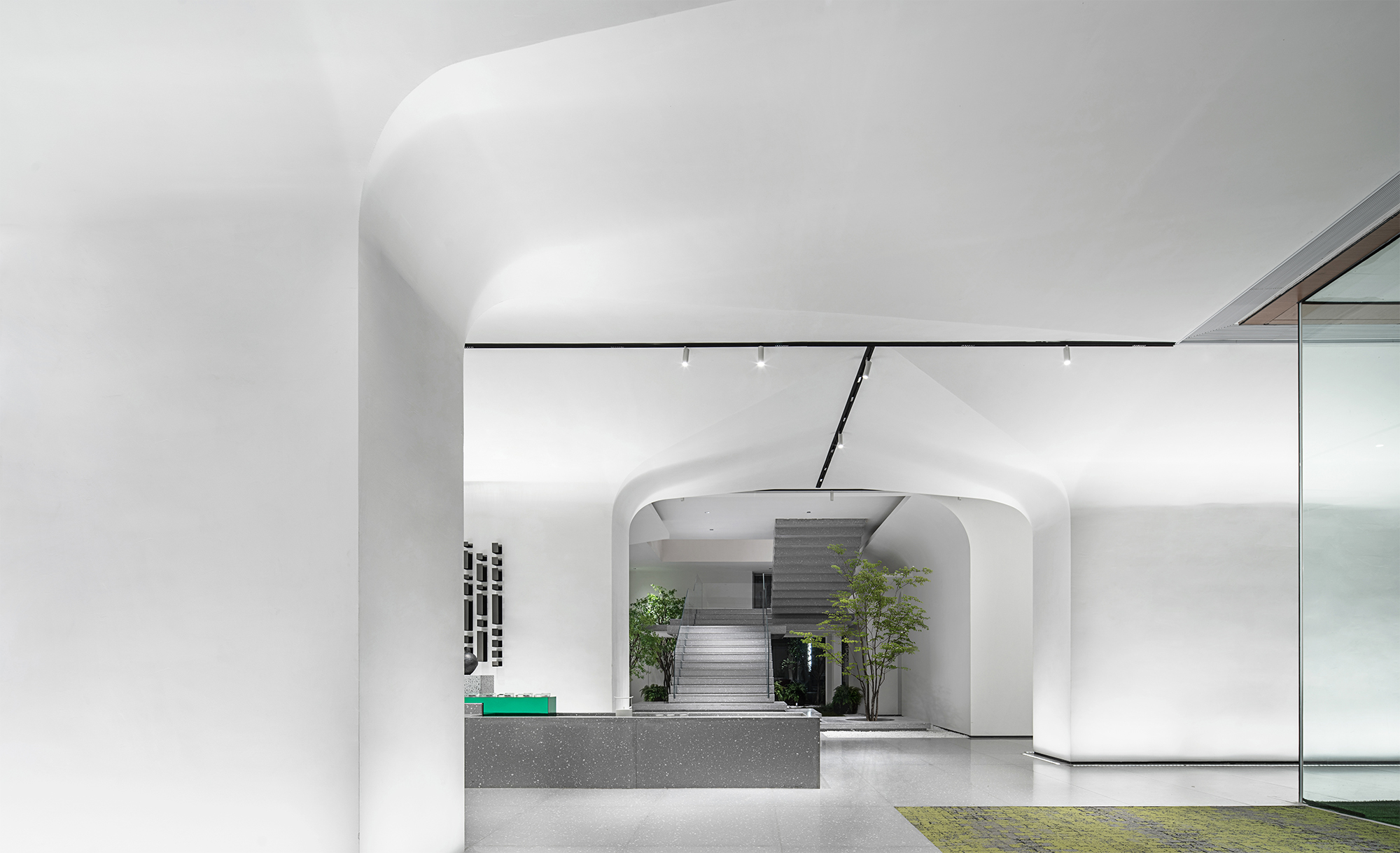
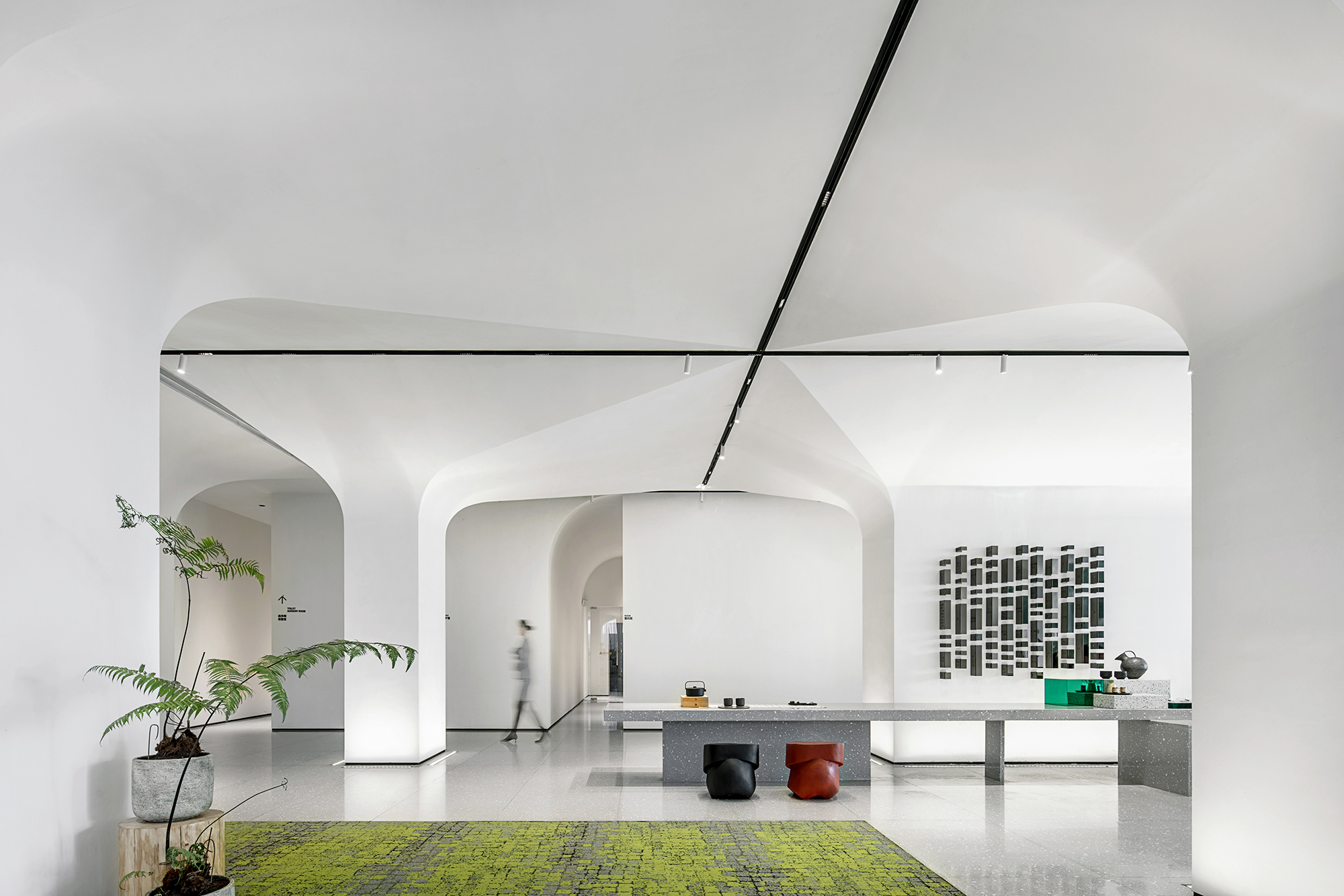
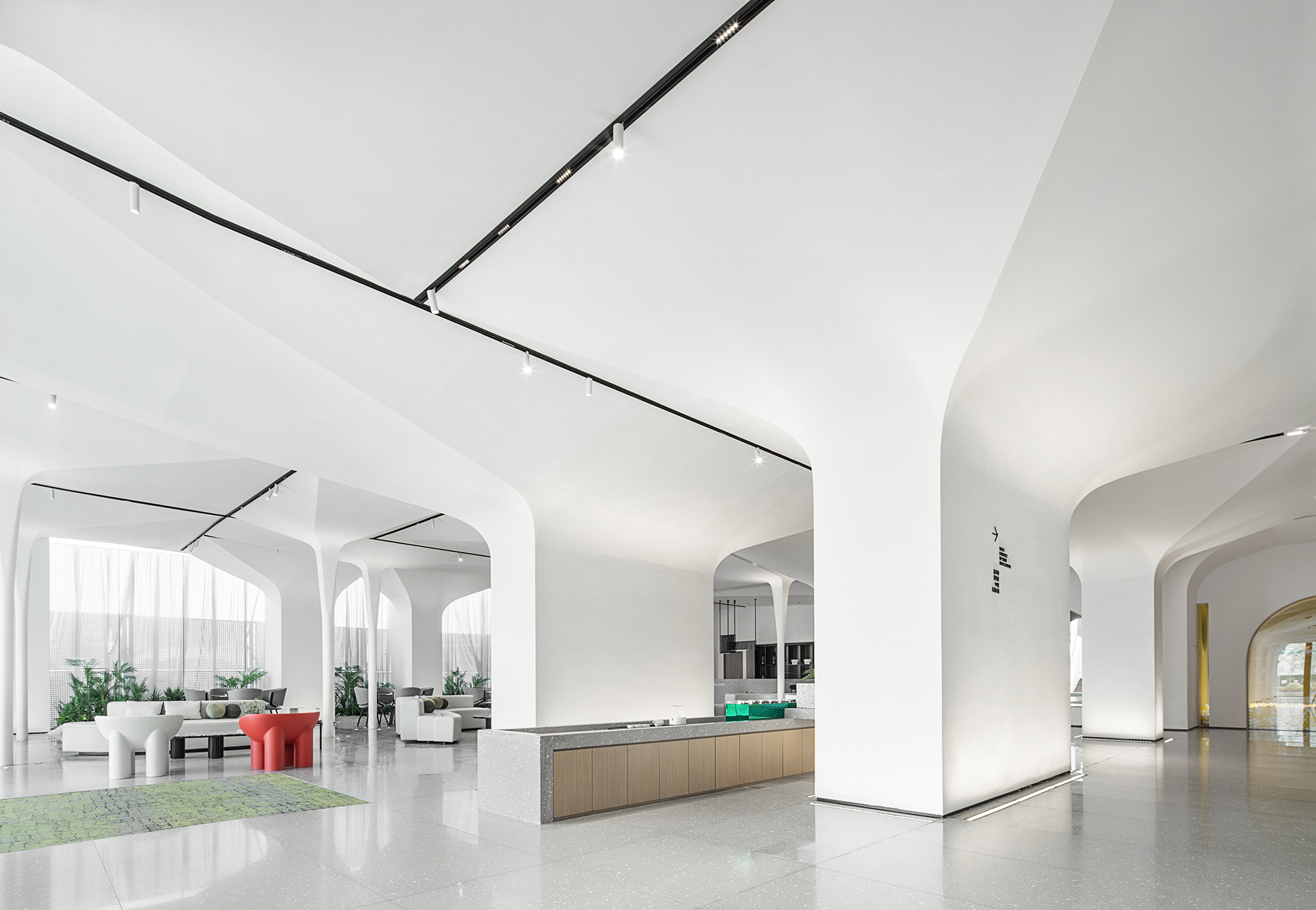
潮汕民间,自古便有将“前榕后竹”的布局方式作为兴建村庄、院落的标准,在村前栽种枝叶繁盛的榕树,蕴含着“前有成就”的美好寓意。我们的项目——时代中国·天韵雅苑落地汕头这座榕树之城,根植于这片土地上人们对于榕树的深厚感情,我们的设计意图通过“榕树”建立空间与在地文化特性的关联。
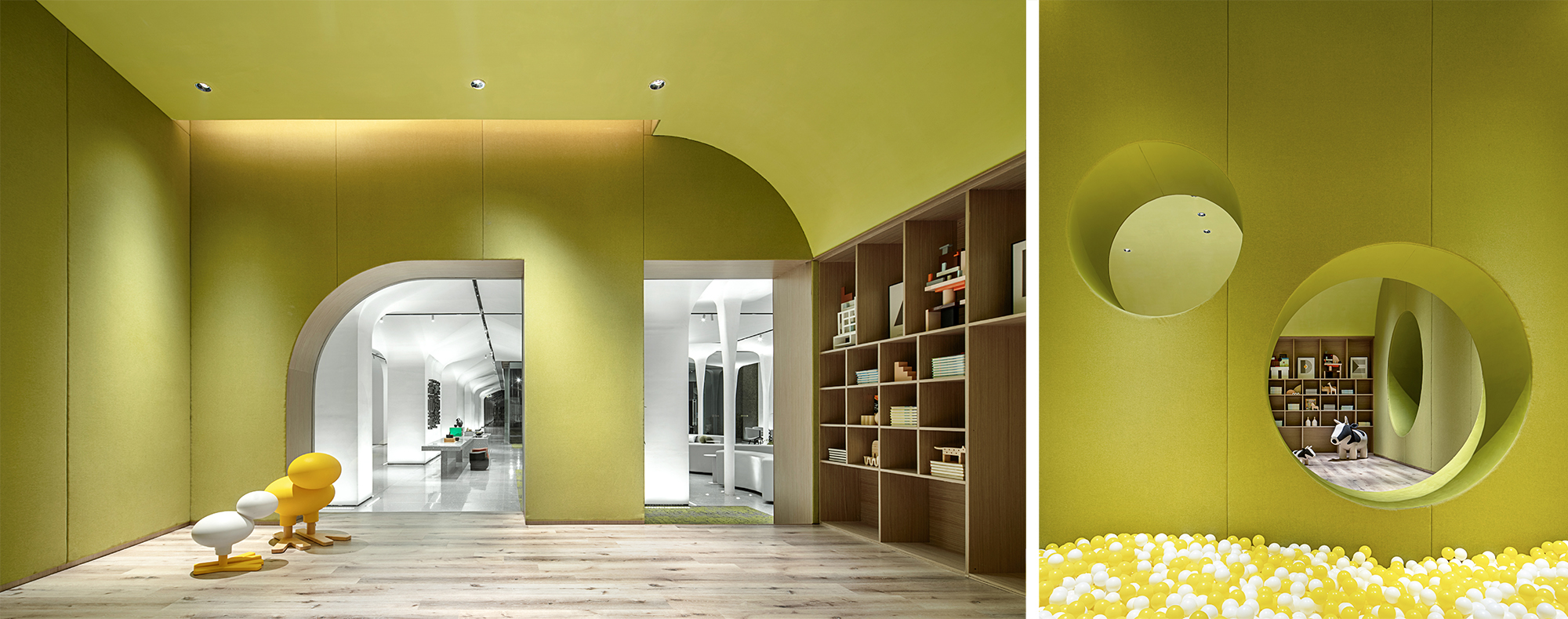
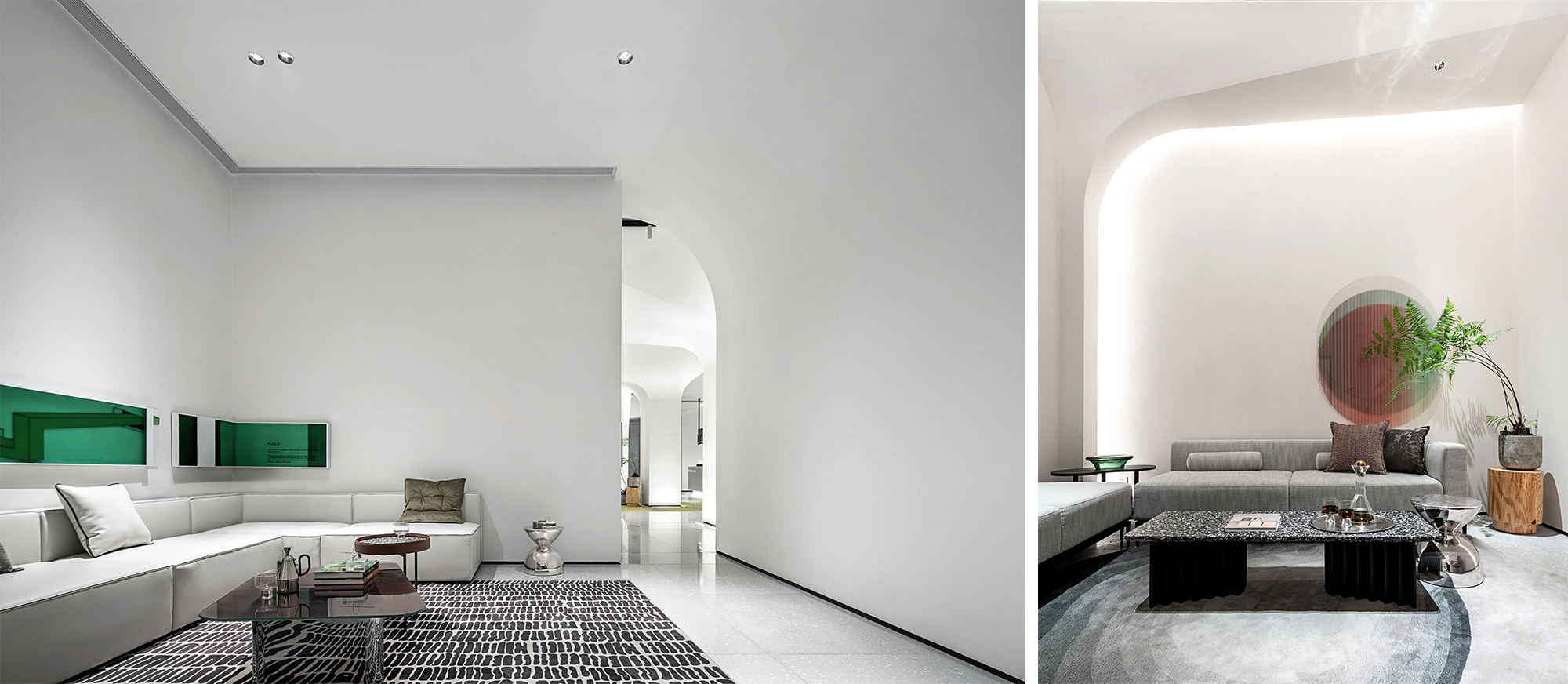
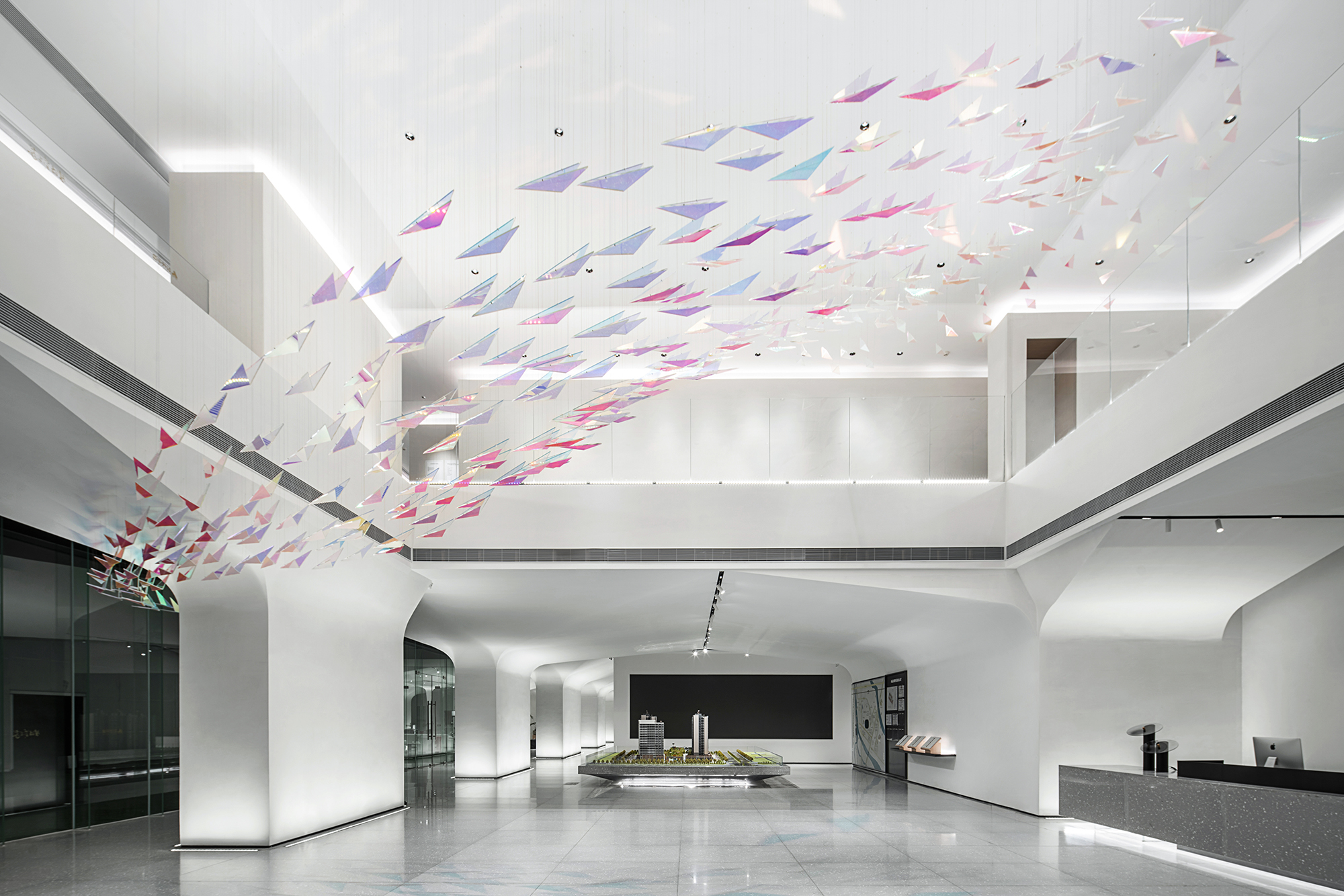
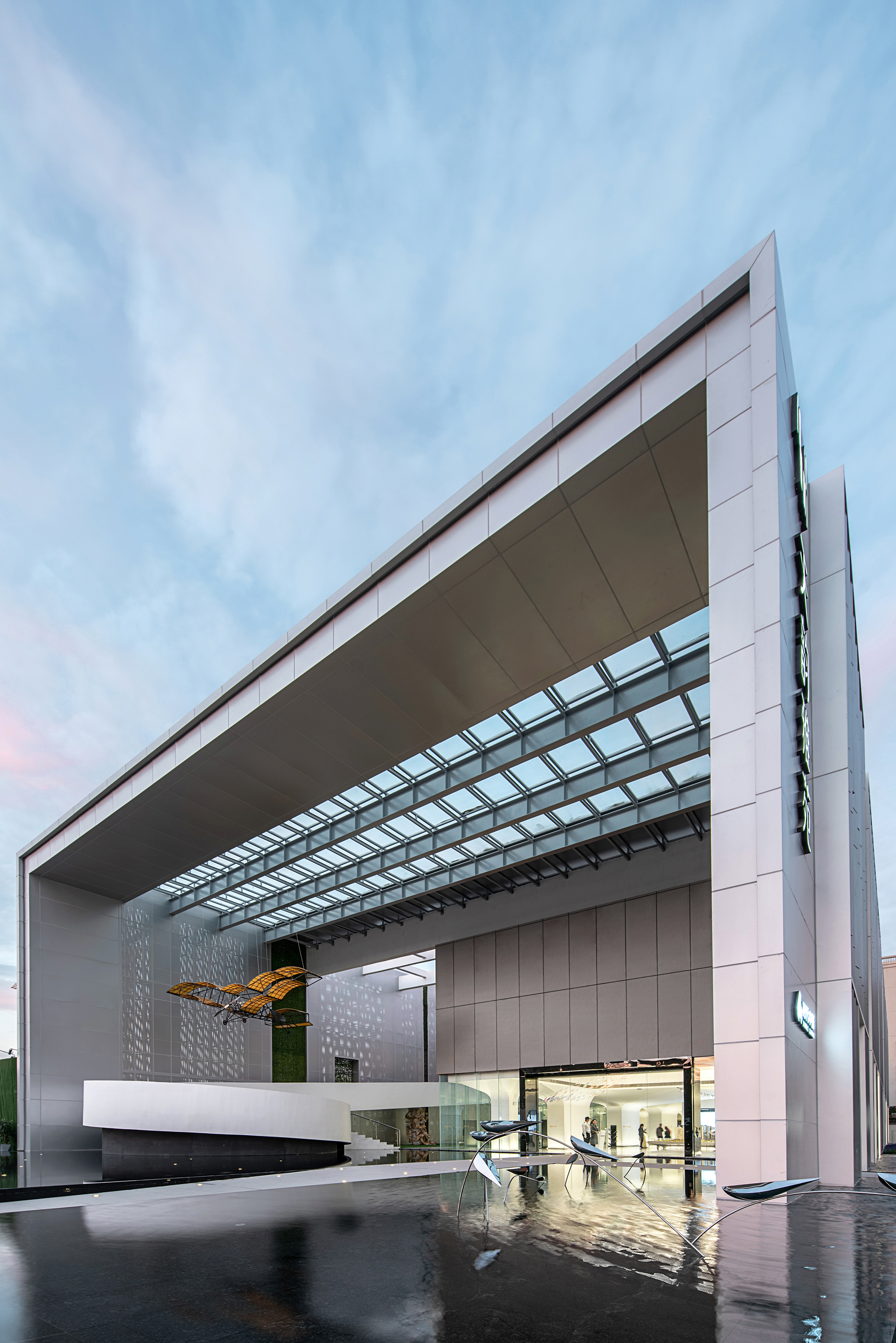
在设计展开之前,基于项目本身规划为幼儿园,并在使用前期承担一部分销售功能的空间属性,设计兼容可持续的环保理念,通过兼顾两类不同属性空间的布局方式及兼容关系,使项目在完成前期销售环节后,可通过尽可能小的改动恢复为幼儿园空间,避免资源的过度浪费。
In Chaoshan folk tradition, the layout of “banyan in the front and bamboos at the back” has long been taken as the standard for building villages and courtyards. Planting lush banyan trees in front of the village carries the auspicious implication of “achieving success in the early stage”. Our project, Times China · Tianyun Yayuan, is located in Shantou, the city of banyan trees. Rooted in the local people’s deep affection for banyan trees, our design intends to establish the connection between the space and local cultural characteristics through the “banyan tree” element.
Before the design kicks off, based on the project’s planned function as a kindergarten that also undertakes partial sales functions in the early stage of use, the design adopts a compatible and sustainable environmental protection concept. By arranging the layout and compatibility relationship of the two types of spaces with different attributes, the project can be restored to a kindergarten space with as few modifications as possible after completing the pre-sales phase, thus avoiding excessive waste of resources.
 PREVIOUS